UTRCA Talks Water Quality
In early April, the Upper Thames River Conservation Authority (UTRCA) water quality monitoring team made a visit to St. Anne’s Catholic School in London. The visit was part of the UTRCA’s GREEN Leaders program, which has reached 16 classrooms across the watershed, with the goal of exploring local environmental issues and creating a hands-on plan to make a real-world impact.
During the Water Quality presentation to Ms. Van Rooyen’s grade 7/8 classroom, the students learned about the many factors that impact the quality of waterbodies, including the local Thames River. These factors may include algae, sediment, and various other types of pollution.
UTRCA discussed the various reasons water samples are collected and monitored. Lab analysis of the samples test for problems and pollutants that are invisible to the naked eye, as well as metals and nutrients. At present, the UTRCA is particularly interested in tracking and preventing phosphorus from entering into our streams and rivers through our Phosphorus Reduction program. One goal of this program is to reduce the intensity of late-summer algal blooms, which occur due to runoff carrying phosphorus into local waterways. Regular monitoring can also support policy decisions by tracking changes in these parameters over time. The UTRCA collects water samples multiple times per month for these reasons.
Aside from the above-mentioned pollutants, the students also learned that monitoring includes measuring the water for pH, dissolved oxygen, temperature, and clarity. Everything works together to determine the overall health of a water body.
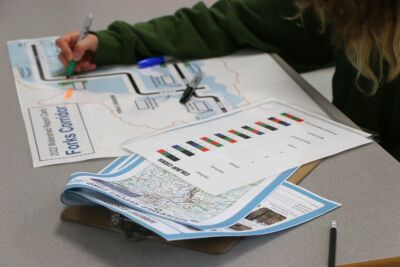
The grade 7/8 class then got to put their new knowledge to the test. Five groups were each assigned a photo of a real-world water quality situation along with parameters that could be applied along with the picture. They then had to work together to determine what situation the photo represented, ranging from invisible pollution from industrial discharge to an algal bloom caused by fertilizer run-off, to a perfectly healthy river.
The students also looked at the UTRCA’s Watershed Report Cards, which were the main resource used for the day’s presentation. The report cards look at forest and water quality for each of the 28 subwatersheds that make up the UTRCA. Students learned about strategies and recommended actions to help improve grades within their own subwatersheds. To end the session, the class got a crash course in microplastics and why they are harmful to the environment and people, as well as what the students can do to help reduce their personal impact.
The UTRCA is very fortunate to be able to work so closely with local schools and pass along some knowledge and expertise to the next generation of environmental stewards. It is our hope that the students continue to learn about and appreciate their local environment, as well as share their passion with others.