

Endangered Kidneyshell Mussels Return to Medway Creek
Hundreds of endangered Kidneyshell mussels have returned to Medway Creek, marking an exciting milestone in the effort to restore a species that was once lost from the Thames River watershed.
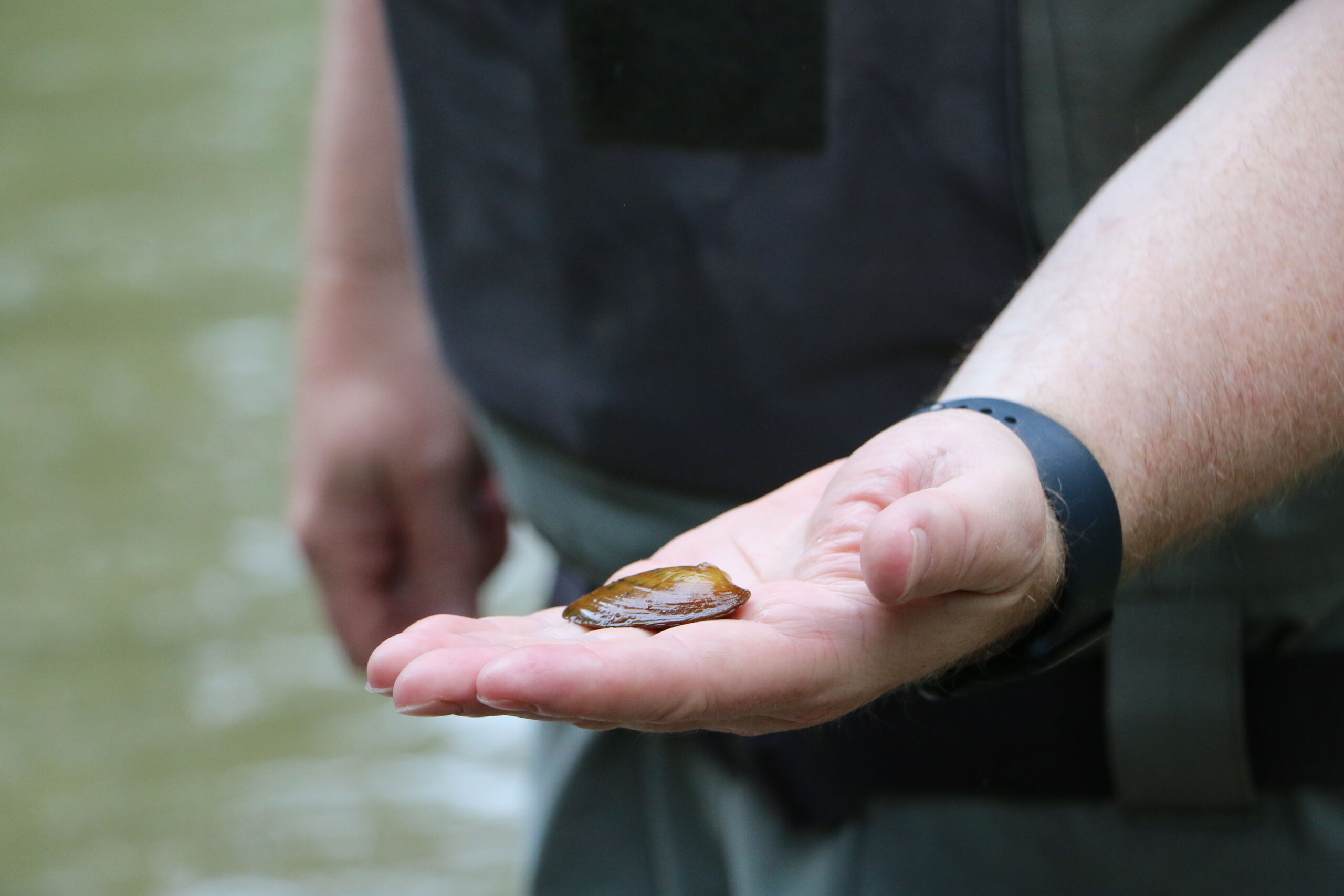
DFO Research Scientist Todd Morris holds a Kidneyshell Mussel
Freshwater mussels are often called the “livers of the rivers” because they naturally filter water, remove particles from the water column, and help maintain healthy aquatic ecosystems. Their presence benefits fish, aquatic insects, and countless other species that depend on clean water.
The Kidneyshell release this July brought together partners from Fisheries and Oceans Canada (DFO), the Ontario Ministry of Natural Resources (MNR), the Healthy Headwater Lab (HHL) from the University of Windsor, Upper Thames River Conservation Authority (UTRCA), Chippewas of the Thames First Nation (COTTFN), City of London, and other organizations committed to protecting aquatic species at risk.
The event began with a tobacco offering led by Treaty, Lands, and Environment Guardians of COTTFN, recognizing the significance of the water, the land, and the species being returned to its home. The offering highlighted the importance of working together to care for the watershed for future generations.
The release builds on work completed over the past several years. In 2025, biologists placed tagged Kidneyshell mussels in protective in-stream cages in two locations in Medway Creek to determine whether the habitat could once again support the species. The results showed promising survival, providing confidence that the creek could support a larger reintroduction.
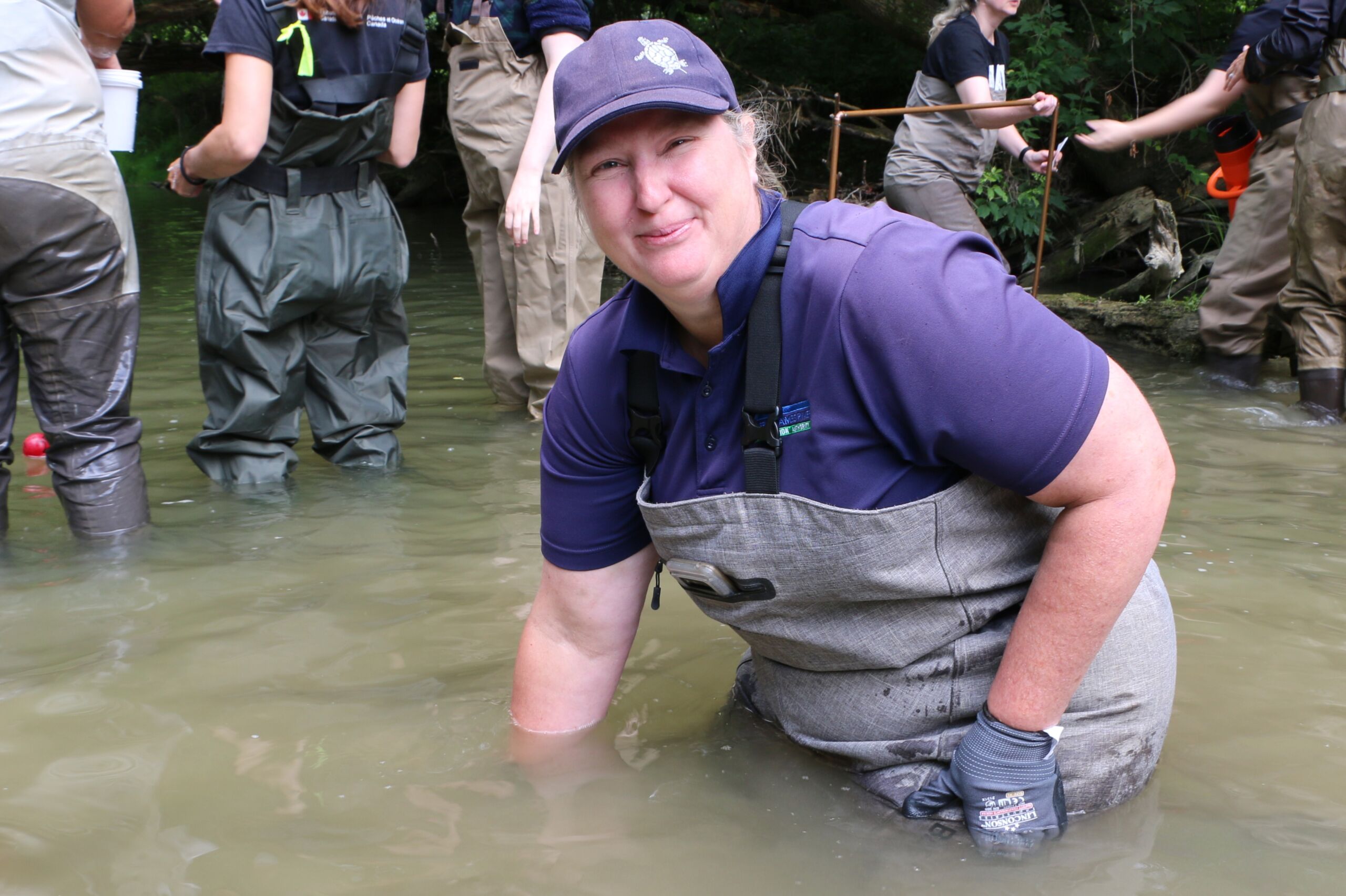
UTRCA Aquatic Biologist Erin Carroll releases a Kidneyshell into Medway Creek
The mussels released this summer were propagated at the MNR’s White Lake Fish Culture Station, where they were carefully raised for nearly a decade before being ready to return to the wild. The release represents years of research, planning, and collaboration.
In-depth study of habitat, environmental DNA (eDNA), extant mussel community indicated conditions were suitable for release. Over the coming years, researchers will continue to monitor the released mussels to better understand their survival, growth, and, ultimately, whether Medway Creek will be able to support a self-sustaining population of Kidneyshell.
“This release is an exciting step toward restoring an important piece of our watershed’s biodiversity,” said Erin Carroll, Aquatic Biologist with the UTRCA. “Healthy freshwater mussel populations help improve water quality and support entire aquatic ecosystems. Seeing Kidneyshell return to Medway Creek is a reminder that conservation is most successful when organizations and communities work together over the long term.”
Through continued stewardship, habitat restoration, and strong partnerships, projects like this help ensure future generations can enjoy healthy rivers and thriving aquatic life.