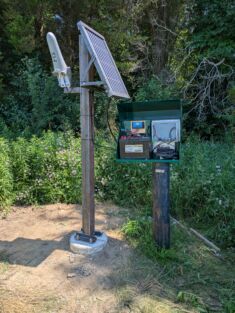

Why Spring Recharge Matters: What Groundwater Monitoring Wells reveal about the health of the Thames River Watershed
When people think about water in the Thames River watershed, they often picture rivers, streams, and lakes — but a significant portion of the watershed’s water is stored underground.
Groundwater occupies the spaces between soil particles and fractures in bedrock beneath our feet. It provides drinking water for many rural residents, supports agriculture and industry, and helps maintain streamflow during dry summer months. Because groundwater is not visible, regular monitoring is essential to help understand its condition as well as protect it as a valuable resource.
Spring is one of the most important times of year to assess groundwater conditions.
A Seasonal Recharge Check Up
Throughout the winter, snow accumulates across the landscape. As temperatures rise in the spring, snowmelt and rainfall infiltrate the ground, replenishing underground water supplies. Hydrogeologists refer to this process as groundwater recharge.
Spring often marks the annual peak in groundwater levels. Sampling monitoring wells during this period provides valuable information about how much water has entered local aquifers after the winter, and how groundwater systems are responding to the current conditions.
By comparing spring measurements over time, scientists can identify long term trends and better understand the effects of:
- Drought conditions,
- Extended wet periods,
- Land use changes, and
- Climate variability.
These observations help build a clearer picture of groundwater conditions across the watershed.
Monitoring Groundwater Across the Thames River Watershed
Groundwater monitoring in the Thames River watershed is part of Ontario’s Provincial Groundwater Monitoring Network (PGMN), a partnership between the Ministry of the Environment, Conservation and Parks and Ontario’s Conservation Authorities.
The program was established following severe low water conditions in the late 1990s. Today, it provides long term groundwater data from hundreds of monitoring wells across Ontario.
Within the Upper Thames River watershed, the Upper Thames River Conservation Authority (UTRCA) manages 28 monitoring wells at 22 sites (map).
Unlike private drinking water wells, monitoring wells are dedicated to scientific data collection. They allow researchers to measure groundwater conditions without interference from pumping or daily household water use.
What Happens During Spring Sampling?
Collecting a groundwater sample involves much more than just lowering a bottle into a well. Before sampling begins, staff measure the water level in the well. They then purge the well by pumping water out until fresh groundwater from the surrounding aquifer flows into it. Depending on the depth of the well and the characteristics of the aquifer, this process can take anywhere from one to six+ hours.
During purging, technicians monitor several field parameters to confirm that the water being sampled accurately represents groundwater conditions. These parameters include:
- Temperature,
- pH,
- Conductivity, and
- Turbidity.
Once conditions stabilize, staff collect groundwater samples and send them to laboratories for analysis.
Scientists test the samples for a range of water quality parameters, including:
- Nutrients,
- Chloride,
- Metals, and
- General water chemistry parameters.
Some monitoring programs also include pesticide testing in selected wells.
Why Long-Term Monitoring Matters
A single groundwater sample provides a snapshot in time. Decades of monitoring data reveal how groundwater systems change and respond to environmental pressures.
Long term monitoring helps scientists identify gradual changes that might otherwise go unnoticed. For example, monitoring can show whether:
- Groundwater levels are recovering after a drought,
- Road salt is affecting shallow aquifers, and
- Changes in precipitation patterns are influencing recharge rates.
Monitoring data also supports:
- Drinking water source protection,
- Low water response programs,
- Land use planning, and
- Climate change research.
Because groundwater moves slowly through the subsurface, changes often occur over years rather than days. Consistent spring sampling provides an important annual benchmark for tracking these trends and understanding how groundwater resources are changing over time.
Looking Beneath the Surface
Healthy rivers depend on healthy groundwater. During dry periods, groundwater continues to discharge to streams and wetlands, supporting aquatic ecosystems and helping maintain water levels.
Each spring, groundwater monitoring wells across the Thames River watershed collect information that helps scientists, municipalities, and Conservation Authorities make informed water management decisions. Although this work occurs largely out of sight, the data collected beneath the surface contributes to protecting one of the watershed’s most valuable natural resources.
The next time you see spring rain soaking into the ground, remember that some of that water is beginning a journey underground. Through ongoing monitoring, scientists are tracking that journey and building the knowledge needed to support a sustainable water future for the Thames River watershed.