

Eastern Hog-nosed Snake (Heterodon platirhinos)
The Eastern Hog-nosed Snake is one of Ontario’s most unique snake species and certainly worthy of attention. From their unique snouts to their dramatic displays, these little critters are packed with interesting traits and behaviors.
This species’s most distinguishing feature is its upturned nose, which gives this species its name. Those snouts are more than just a cute feature – they are vital to the snake’s burrowing abilities.
This harmless, heavy body snake can reach lengths of 50 to 115 centimetres. Its colour and patterns are highly variable, from plain brown or grey, to pale beige with dark-brown blotches. They are found in fields, open forests, beaches, and old dune habitats with loose, sandy soils where they can bury themselves.
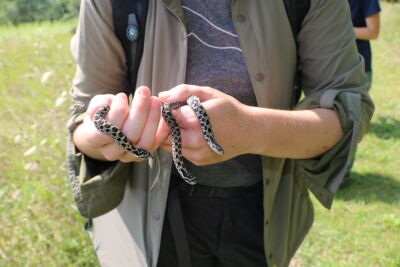
In early summer, the female typically lays a clutch of 25 to 35 eggs in burrows excavated in the sand. She may also deposit eggs in rotting logs or under leaves. The eggs hatch after 30 to 60 days of incubation.
Hog-nosed snakes specialize in feeding on American toads, which they hunt during the day. Their unique shovel-shaped nose is especially adapted for digging and locating toads within the soil. Not only are they immune to the toxic secretion of the toad, but they also have a pair of enlarged teeth at the back of their mouth, which are used to puncture inflated toads (inflation is a common defensive mechanism for toads), making them easier to swallow.
Being timid, these snakes commonly hide from predators by burrowing into leaves and sand. When disturbed, they usually lie motionless, relying on their camouflage pattern to protect them. Hog-nosed snakes are well-known for their impressive defensive displays when threatened and will attempt several tactics to escape harm. This harmless snake will perform a dramatic bluff to intimidate predators by raising its head, spreading its neck like a cobra, gaping its mouth and hissing loudly. This Oscar-worthy actor may also feign a strike with a closed mouth, but they rarely bite in self-defence.
If this display fails to deter the predator, the snake then “plays dead”, rolling onto its back, opening its mouth, hanging out its tongues, and releasing a foul odour. If turned over onto its belly, it promptly rolls onto its back again and continues to play dead. Even hatchlings right after emergence are known to use this tactic when threatened.
Habitat loss, road mortality, development pressure, and persecution by humans have resulted in population declines across its range. The hog-nosed snake is listed as threatened and protected both provincially and federally.
View a video of Upper Thames River Conservation Authority (UTRCA) staff releasing baby Eastern Hog-nosed snakes on YouTube.
If you’d like to help ensure endangered reptiles like the Eastern Hog-nosed Snake remain in your watershed for generations to come, consider donating to the UTRCA’s Southern Ontario At Risk Reptiles (SOARR) program here.
More photos on our Flickr album.