

Checking in on Kidneyshell Mussels Reintroduced to Medway Creek
There is some encouraging news for the endangered Kidneyshell mussels released into Medway Creek earlier this year as part of an ongoing effort to reintroduce a species that had disappeared from the Thames River.
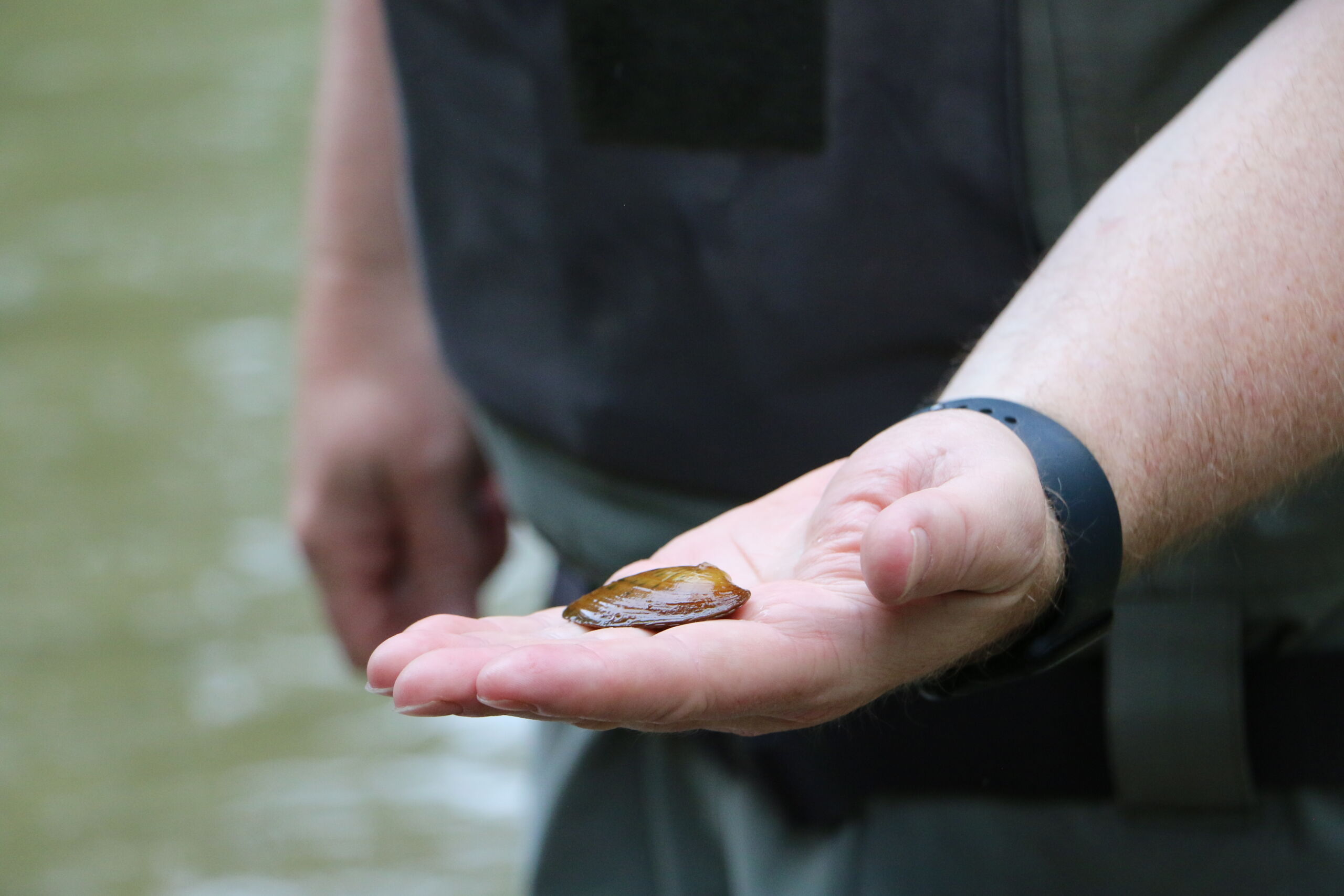
DFO Research Scientist Todd Morris holds a Kidneyshell Mussel
In July, hundreds of hatchery-raised Kidneyshell mussels were released into Medway Creek through a collaborative effort involving Fisheries and Oceans Canada (DFO), the Ontario Ministry of Natural Resources, University of Windsor's Healthy Headwater Lab, Upper Thames River Conservation Authority, Chippewas of the Thames First Nation, City of London, and other partners.
The release followed several years of research and monitoring to determine whether conditions in Medway Creek were suitable for reintroduction, including a successful trial in 2025 using tagged mussels held in protective cages in the creek.
Last week, DFO researchers returned to the release site to check on the mussels before winter. They focused on five release locations, using PIT tags (small electronic identification tags) to locate individual mussels and check their survival and reproductive condition.
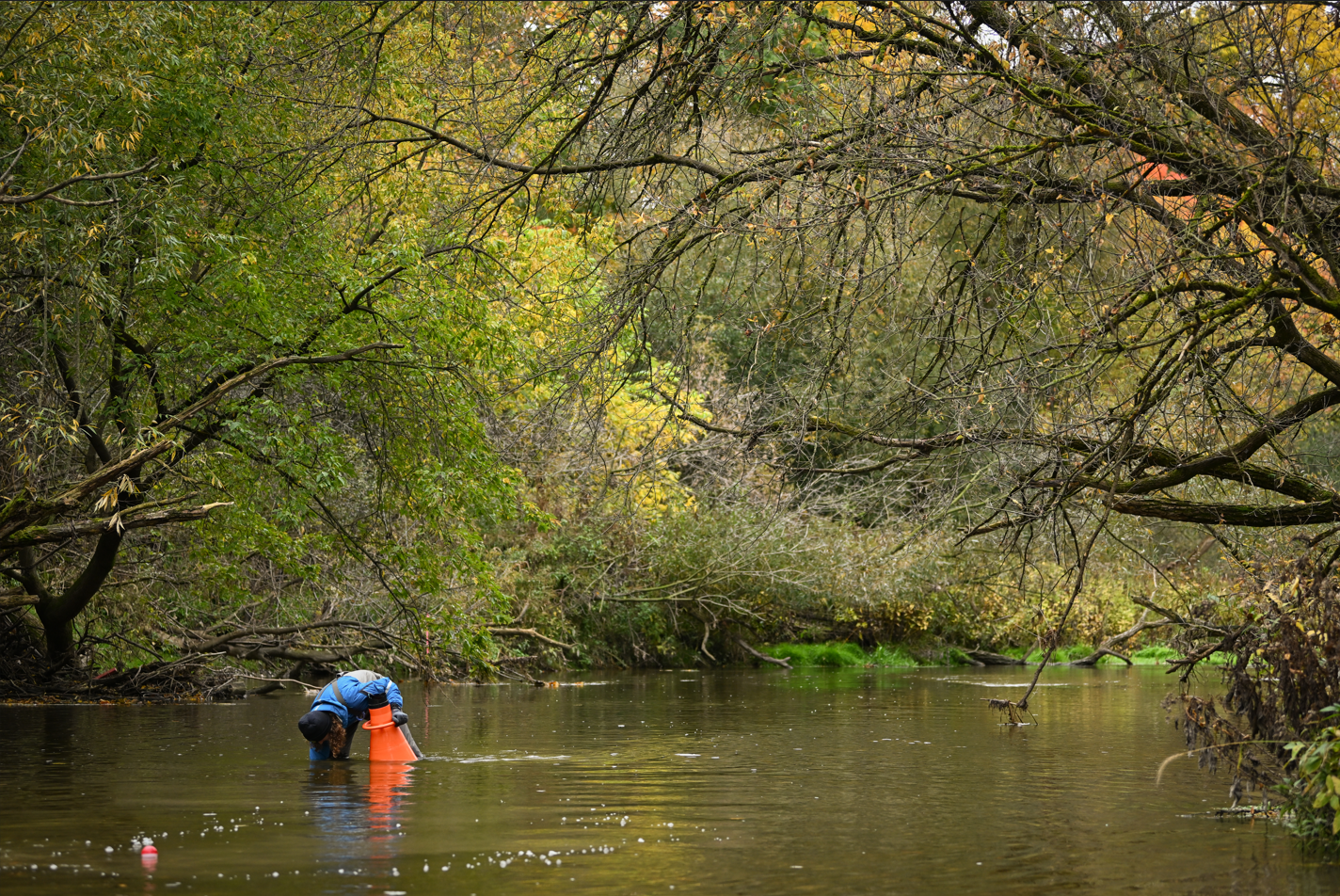
Photo provided by DFO
All 50 mussels targeted were found alive, a 100% survival rate for the animals checked. Of those, 18 (36%) were gravid, meaning they were carrying developing larvae, called glochidia.
Freshwater mussels have an interesting life cycle. Their larvae must attach to the gills of a suitable host fish – in this case, darter species such as Greenside Darter, Johnny Darter, or Fantail Darter – where they develop before dropping off as tiny juvenile mussels. Without suitable host fish, the mussels can't complete their life cycle.
Based on the results of the survey, researchers estimate there could be 300 to 400 gravid female Kidneyshell mussels in the creek, each carrying thousands of larvae. Those larvae will spend the winter with their mothers, and in the Spring they will look for a suitable fish to attach to and complete their development.
It is still early, and the females were likely already gravid when they were released into the river. However, finding all 50 mussels alive with a good proportion of them carrying larvae is a positive sign for the future of Kidneyshell in the Thames River.
The next important step will be in the spring, when the larvae need to find suitable host fish. Successful reproduction and survival of young mussels will be key to establishing a self-sustaining population.
Freshwater mussels play an important role in river ecosystems by filtering water, cycling nutrients, and providing habitat for other aquatic organisms. Reintroducing Kidneyshell to Medway Creek is one part of a larger conservation efforts in the Thames River watershed.
These early results are a good start, but it will take continued monitoring over the coming years to determine whether Kidneyshell can once again establish a healthy, self-sustaining population in Medway Creek.