

How to Attract Native Insect Pollinators to Your Garden
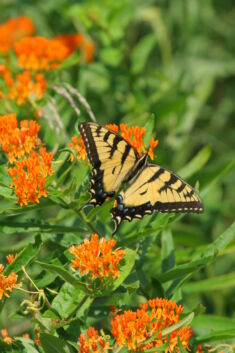
Insect pollinators are essential in our ecosystems, providing vital services to fruit and vegetable crops, flowers, trees, and shrubs. The production of many foods (e.g., apples, cherries, blueberries, squash, and tomatoes) depends on pollinators. The loss of these insects would have far-reaching effects on our native plant communities and organisms that depend on them for shelter and sustenance.
Generally, pollination is achieved by two means: wind and insects.
Plants that are wind pollinated have indiscrete, green flowers and light pollen that floats in the air. Flowers that have adapted to insect pollination have heavy, sticky pollen and showy blooms. As the insect enters the flower, pollen from the male structures of the plant adheres to the insect’s body. When the insect moves to another flower, the pollen is deposited onto the female parts of the next bloom. When pollination is successful, it results in fertilization and the development of a fruit, nut or seed.
Insect pollinated plants have evolved unique characteristics to entice visitors including: nectar, large quantities of pollen, bright colours, and fragrance.
Most native pollinators are insects, including solitary bees and bumblebees, hoverflies, wasps, butterflies and moths, flies, and beetles. Other species, such as bats and hummingbirds, also assist with pollination.
Sadly, our native insect pollinators are on the decline. Scientists point to habitat loss and fragmentation, urban development, increase use of pesticides, environmental pollution, a decrease in native plant diversity due to invasive species, and climate change as being among the most significant drivers.
The good news: you can help! To provide natural foraging and nesting areas:
- convert large or small parcels of your property into patches of flowers,
- plant a diversity of native plants,
- plant flowers that bloom from early spring into late fall,
- choose different shaped flowers to accommodate a diversity of pollinators,
- provide a mass of the same species to facilitate movement between flowers,
- provide a water source in the hot summer months, and
- avoid the use of pesticides.
Many native bees nest and overwinter in the pithy stems of old plants, hollow twigs, bunching grasses, holes in standing trees, rotting logs, and underground in bare patches of soil or dirt mounds.
To provide nesting and overwintering habitat:
- leave some open areas of undisturbed soils for ground nesting bees,
- leave standing, dead plants over the winter, and
- provide tall and bunching grasses and fallen logs.
Don’t underestimate the impact you can have on the health and population of native insects. Creating these habitats not only benefits pollinators but also ensures we keep a diverse population of our native plants.
Contact: Brenda Gallagher, Forestry Technician (Vegetation).