Hundreds of Students Take Action for Lake Erie
This spring, the Upper Thames River Conservation Authority (UTRCA) wrapped up a year-long regional education and stewardship initiative that brought over 500 high school students face-to-face with the challenges — and the possibilities — of caring for Lake Erie.
The Lake Erie Student Summit and Stewardship (LESS) project was a collaborative effort between the UTRCA and five partner Conservation Authorities (CAs) across the western Lake Erie basin: St. Clair Region, Essex Region, Lower Thames Valley, Kettle Creek, and Catfish Creek CAs. Together, the project reached students across multiple school boards through a shared learning experience built around the question: How can youth better connect, share, and care for Lake Erie?
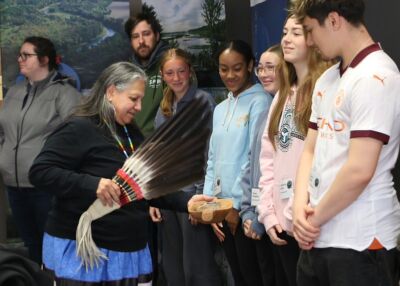
With that question as their guide, classes took part in Great Lakes Learning sessions throughout the fall and winter that introduced students to the ecological issues facing Lake Erie from both a western science perspective and through the teachings of local Indigenous Knowledge Keepers. Students then got their hands dirty — literally — completing stewardship projects in their own communities. Across the six participating CAs, students planted trees, seeded native wildflowers, live staked riverbanks, removed invasive species, and cleaned up shorelines, contributing to the health of local watersheds that ultimately drain into Lake Erie.
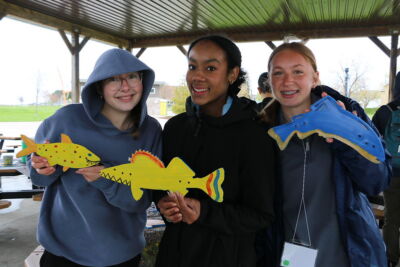
The project culminated on April 29, 2026, with the Lake Erie Student Summit in Sarnia, where 100 students from across the region gathered at the St. Clair River waterfront for a day of hands-on learning and connection. The weather was cool and rainy — a classic spring day on the Great Lakes — but it didn't dampen the energy. Students rotated through experiential learning stations led by Water Rangers, Blue Water Anglers, and Tourism Sarnia-Lambton. Brenda Lorenz from Friends of the St. Clair River shared the remarkable story of the decades-long effort to remove the St. Clair River from Canada's Areas of Concern list — a powerful example of what sustained community action can accomplish — and Friends of the St. Clair River also provided funding that made the Stream of Dreams activity possible. Indigenous Knowledge Keeper Lynn Rosales from Aamjiwnaang First Nation offered teachings that grounded the day in local history and reciprocal relationships with water. Students also heard from a keynote speaker from the Ontario Ministry of the Environment, Conservation and Parks, whose funding made the project possible.
More than anything, the day was about gathering — students from different schools, communities, and corners of the region coming together at the water's edge to meet the people working to protect it and to see themselves as part of that work too.
The LESS project was funded through the Ontario Ministry of the Environment, Conservation and Parks. UTRCA is grateful to all of the partner CAs, school boards, community organizations, and Indigenous partners whose time, expertise, and enthusiasm made it what it was.
For more photos, visit our Flickr album.