

Mini Forest at Fanshawe Conservation Area
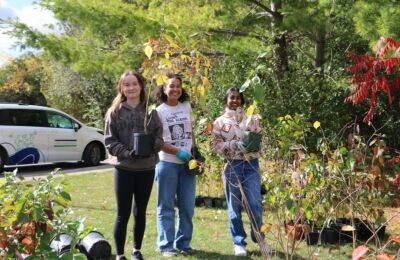
On October 20, the Upper Thames River Conservation Authority (UTRCA) in partnership with the London Environmental Network (LEN) planted a mini forest at Fanshawe Conservation Area! With the help of community volunteers and students from Western University's Dirty Nature Writing Course, 300 native trees and shrubs were planted within 100 square meters.
Earlier in June, the UTRCA and LEN, along with the help of volunteers, completed site preparations on this area which was then simply a patch of mowed grass. Site preparation included laying down cardboard, mulch, and compost to kill the grass and provide a nutrient rich soil to plant in this fall.
The trees and shrubs planted in the mini forest are all native to the London area and will provide shelter and food to local wildlife. Species planted include Eastern White Pine, Black Cherry, Bitternut Hickory, Pagoda Dogwood, Nannyberry, Witch Hazel, Yellow Birch, and more.
Apart from the wildlife benefits that mini forests provide, they also aid in water conservation by:
- Storing water from rainfall and snowmelt and then releasing it slowly into groundwater,
- Regulating rainfall through evapotranspiration (the combined processes through which water is transferred to the atmosphere from open water and ice surfaces, bare soil, and vegetation that make up the Earth's surface),
- Preventing erosion by stabilizing soil and reducing sediment that runs off into local waterways, and
- Filter sediment and nutrients from water.
This mini forest was possible thanks to RBC, Green Communities Canada, the City of London, Enbridge, Thriving Communities, TRY Recycling, and Waste Connections of Canada.
For more information, please contact April Scholz, Community Partnership Specialist.
For more photos, visit our Flickr album.