“Protecting the Source” at the 2026 Children’s Water Festival
From May 12 to 15, the Thames-Sydenham Source Protection Region proudly participated in the 2026 London-Middlesex Children’s Water Festival at Fanshawe Conservation Area. The festival provided a fun and interactive opportunity for students to learn more about drinking water protection, where their water comes from, and the science behind keeping it safe.
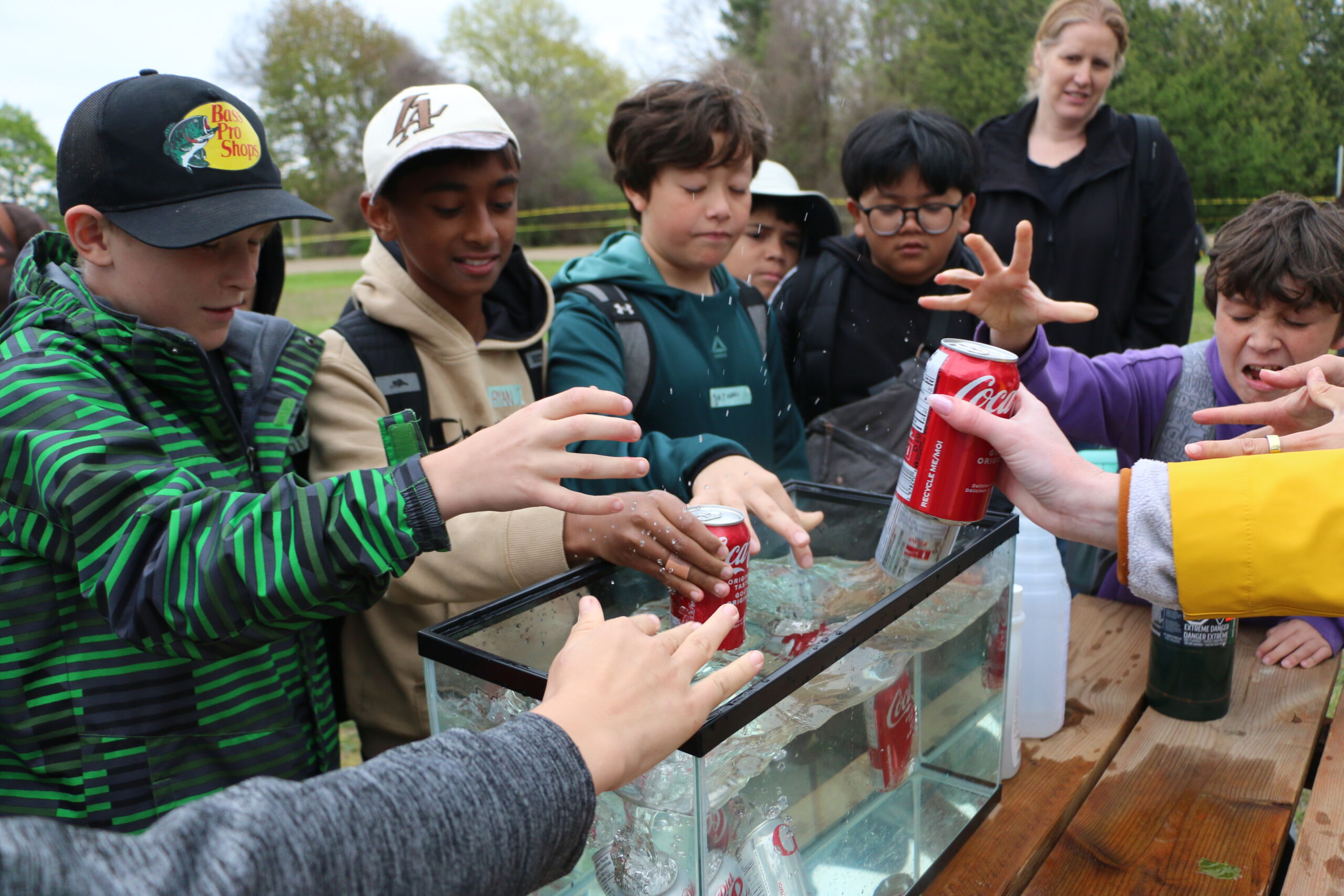 Throughout the event, students took part in a variety of hands-on activities focused on drinking water source protection and the multi-barrier approach used to protect municipal drinking water supplies. One of the highlights of the festival was a demonstration focused on the dangers of improper handling and disposal of hazardous household substances, particularly dense non-aqueous phase liquids (DNAPLs).
As part of the activity, students were asked to predict what would happen when a can of Diet Coke and a can of regular Coke were placed into a tank of water. Students observed that the regular Coke sank to the bottom due to its higher density from the sugar content, while the Diet Coke floated. This simple but effective demonstration helped students visualize how heavier-than-water contaminants, such as DNAPLs, behave once released into the environment.
Students learned that DNAPLs are especially concerning because they sink through groundwater and can settle at the bottom of aquifers, making them extremely difficult and, in some cases, nearly impossible, to remove once contamination occurs. These substances can pose a serious risk to drinking water quality and public health. The activity reinforced the importance of preventing contamination at the source, as prevention is often far more effective and cost-efficient than attempting remediation after pollution has occurred.
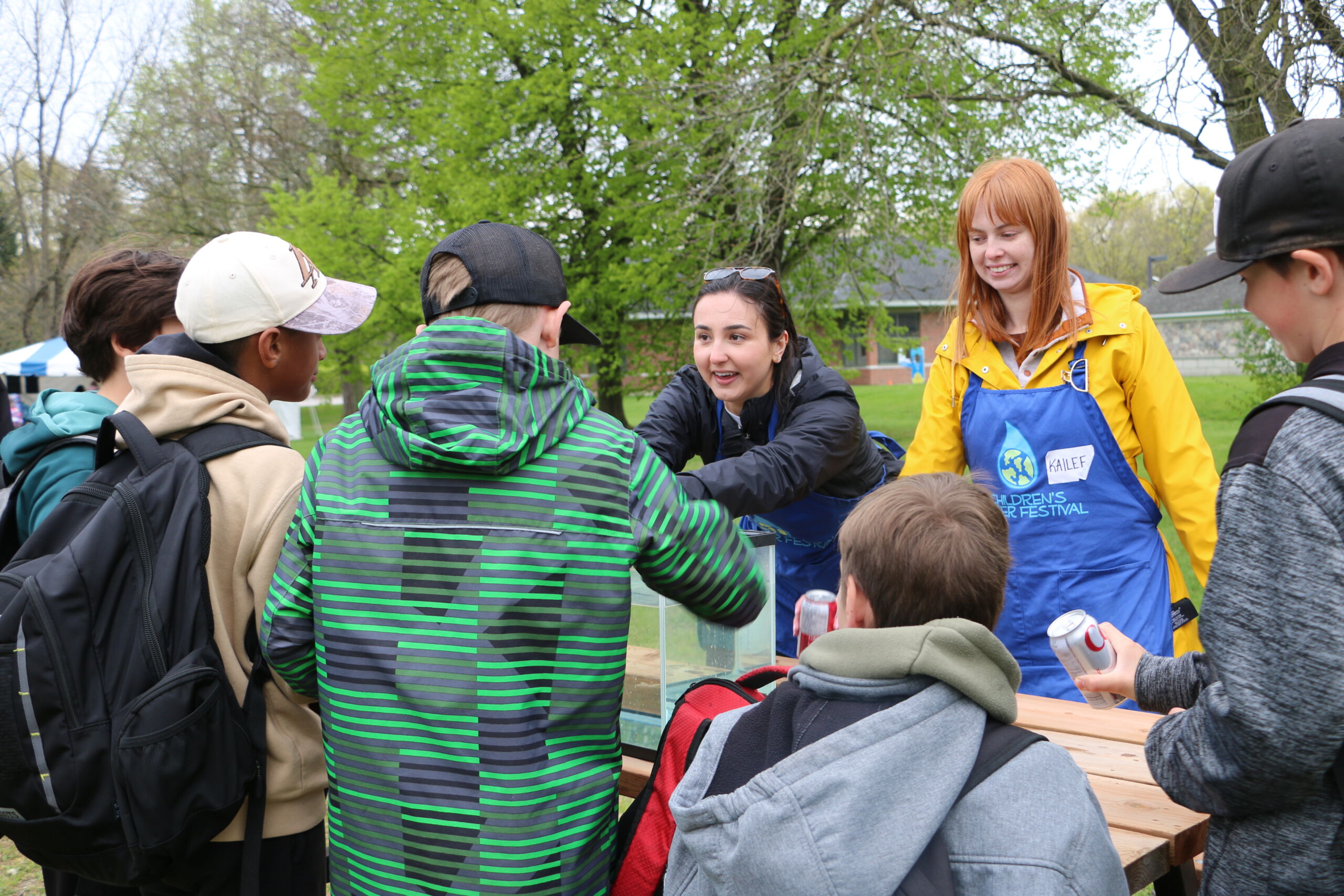 The discussion also emphasized the importance of properly disposing of hazardous household waste by bringing materials to approved Hazardous Waste Disposal Sites rather than pouring them down drains, onto the ground, or into household garbage. Small actions can have significant impacts on protecting local water resources.
Events like the London-Middlesex Children’s Water Festival play an important role in helping students understand where their drinking water comes from, how easily it can be impacted, and what they can do to help protect it. By engaging students through interactive learning and real-world examples, the festival encourages the next generation to think about how everyday actions can affect local water sources and why protecting clean drinking water is everyone’s responsibility.