
2024 Black Redhorse Suckers Monitoring Update
The Upper Thames River Conservation Authority (UTRCA) has wrapped up the final year of a special three-year project to locate and monitor Black Redhorse (Moxostoma duquesnei) throughout the watershed. This native fish species is recognized as a Threatened Species at Risk (SAR), and understanding where it thrives helps us protect and restore crucial aquatic habitats in the Thames River.
Why Black Redhorse Matters
- Unique Native Fish: Black Redhorse are an important indicator of healthy, flowing waters with clean, coarse bottom substrates like cobble and gravel.
- Keystone Connections: Like many riverine species, Black Redhorse depend on good water quality and stable flow. Finding them typically signals a well-functioning ecosystem that can support other sensitive wildlife, including freshwater mussels (many of which are also Species at Risk).
2024 Field Season Highlights
- Extensive Surveys: UTRCA conducted 98 electrofishing surveys, monitoring 94 locations across the watershed. A main focus of fish surveys was to revisit sites with historic Black Redhorse records or to sample nearby reaches with good habitat potential.
- Black Redhorse detected!: Biologists located Black Redhorse at ten sites in 2024, including areas where the species had not been confirmed in some time.
- Habitat Insights: Cobble and boulder substrates were the most common bed materials at sites where Black Redhorse were found.
- Other Aquatic SAR Detections: Along with Black Redhorse, the team detected several other at-risk species in the watershed, including Northern Sunfish, Silver Shiner, and Eastern Sand Darter.
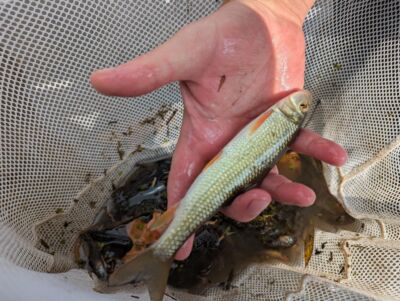
Black Redhorse
A Watershed-Wide Effort
Over the past three years of the Aquatic Habitat Stewardship Program, biologists surveyed a wide range of habitats. In total, 24 Black Redhorse sightings were recorded across 19 different locations from 2022 to 2024. Not all sub-watersheds turned up Black Redhorse, underscoring how flow, substrate, and water quality must align for these fish to thrive. Regions with frequent sightings—like portions of Waubuno Creek, the Middle Thames near Thamesford, and the Plover Mills corridor—consistently feature the clear, moving waters and coarse substrate that Black Redhorse favor.
Community and Conservation Impacts
- Restoration Priorities: Identifying important Black Redhorse habitat helps the UTRCA target future restoration efforts, such as improving streambank stability and reducing sediment inputs.
- Stewardship Plans: Findings will guide landowners, municipalities, and local groups in implementing best management practices—from septic upgrades to low-impact development—aimed at improving water quality and flow conditions in the Thames River.
Get Involved!
- Volunteer for Stream Projects: Local stewardship events, including cleanups and tree plantings, help maintain the river's health.
- Monitor Rivers and Streams: Eroded banks and excessive algae growth can harm fish habitat. Reach out to the UTRCA if you notice concerning changes.
- Spread the Word: Let your neighbors know about the presence of Black Redhorse and the importance of preserving healthy, flowing waters for native fish and mussels.